Celebrate! The Company Expands the Scale of the Mold Department
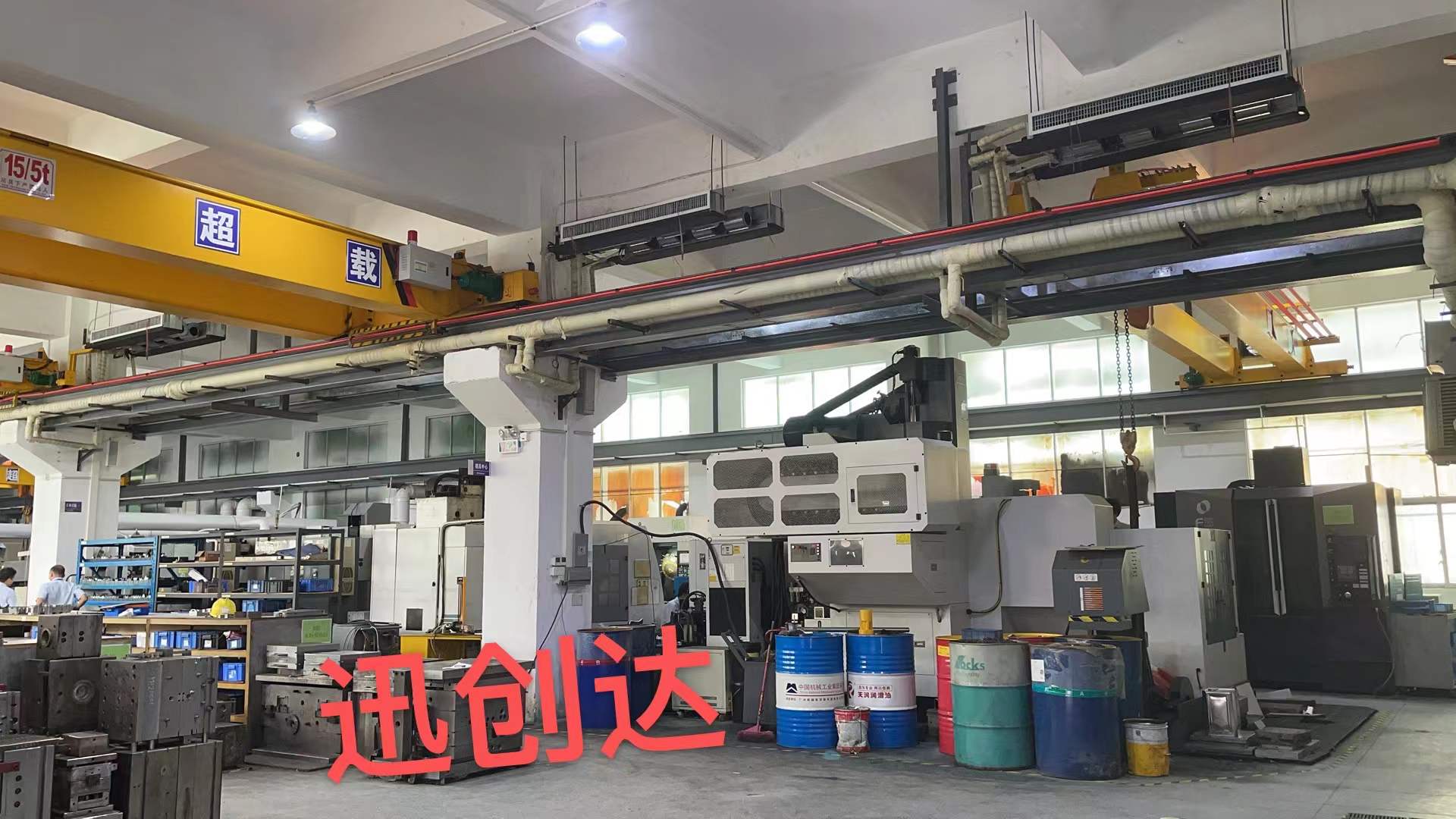
In order to be stronger and bigger in the industry, the company has purchased new equipment to expand the territory of the mold department.
Moulds are all kinds of moulds and tools used in industry to obtain the required moulds and tools by injection molding, blow molding, extrusion, die casting or forging, smelting, stamping and other methods. Such tools are composed of various parts, and different moulds are composed of different parts. It mainly realizes the shape of the article by changing the physical state of the molded material. Metals are classified according to the adopted technology, and commonly used are: stamping dies, including blanking dies, bending dies, drawing dies, hole turning dies, shrinkage dies, undulating dies, bulging dies, shaping dies, etc. The following is a brief introduction of the common dies: 1. Stamping die Stamping die is a die for sheet metal stamping and separation. The forming die has a cavity, and the separating die has a cutting edge. The characteristics of stamping die are: high precision, accurate size, fast stamping speed, and dozens to thousands of stamping times per minute; The die has a long service life, and some silicon steel sheet blanking dies have a service life of several million times or more.
(1) The most commonly used stamping die has only one station to complete one process. This mold is widely used, simple in structure, easy to manufacture, but low in efficiency.
(2) In order to improve the efficiency, multiple stamping processes, such as blanking, drawing, punching and trimming, can be arranged on one die, so that the blank can complete multiple stamping processes at one station. This die is called compound die. (3) In addition, blanking, bending, drawing, punching and trimming are arranged at different stations of a die. In the stamping process, the blank is continuously stamped and formed through multiple stations in turn, and the final station becomes the finished product. This die is called progressive die, which is also called continuous die. Second, Forging die is a die used for hot metal forging. The technical characteristics of forging are: there are many complicated cavities; The mold should bear the high-speed impact of forging hammer or the pressing of heavy load; In the process of use, it is often in a state of rapid cooling, rapid heating and alternating cold and hot. Therefore, the die material should have high strength, toughness and wear resistance. When hot forging, it must also have high temperature strength and hardness, and undergo toughening heat treatment.
(1) During die forging, the blank is often deformed many times before it can be made into forgings, which requires several cavities to be engraved on a module.
(2) The metal is sent to each cavity in turn, flows plastically in the cavity, and finally fills the cavity to make forgings.
(3) In die forging, it is difficult for the blank to have the same volume as the cavity in final forging. In order to avoid waste products, a slightly larger blank is often selected.
(4) A flash groove is arranged around the cavity of the interface between the upper die and the lower die of the final forging die to store excess metal, and the flash is cut off after forming. Third, Extrusion die is a die used to extrude metal. Because the metal needs to be extruded from the female die under great pressure, the extrusion cylinder and the female die of reverse extrusion need to have high strength, so multi-layer prestressed composite structure is often adopted.
(1) The positive extrusion die has a static female die, an extrusion cylinder for placing blanks, and a punch for applying pressure to blanks.
(2) The extrusion cylinder of the reverse extrusion die is a female die, and the punch is a male die.
(3) The length of punch and punch should be short to avoid instability and bending under high compressive stress. Four, Die-casting Die-casting die is installed on the die-casting machine, which can inject liquid metal into the cavity under high pressure and maintain the pressure until the metal solidifies and forms. Generally, the die-casting parts have thin and hollow walls, many ribs, complex shapes and structures, precise dimensions and smooth surfaces. Because the metal is formed at high melting temperature, the die-casting die needs to be made of high-temperature resistant materials.
(1) It is mainly used for aluminum, zinc and copper pieces, and can also be used for steel pieces.
(2) The structure of the die casting die is similar to that of the plastic injection die. It consists of a moving die and a fixed die, and the core is used as the cavity of the casting.
(3) After the metal is cooled and solidified in the mold cavity, the core is drawn out and the mold is separated. The above-mentioned common metalworking dies have different manufacturing methods for different purposes. The more common manufacturing methods are cutting, casting, etc.
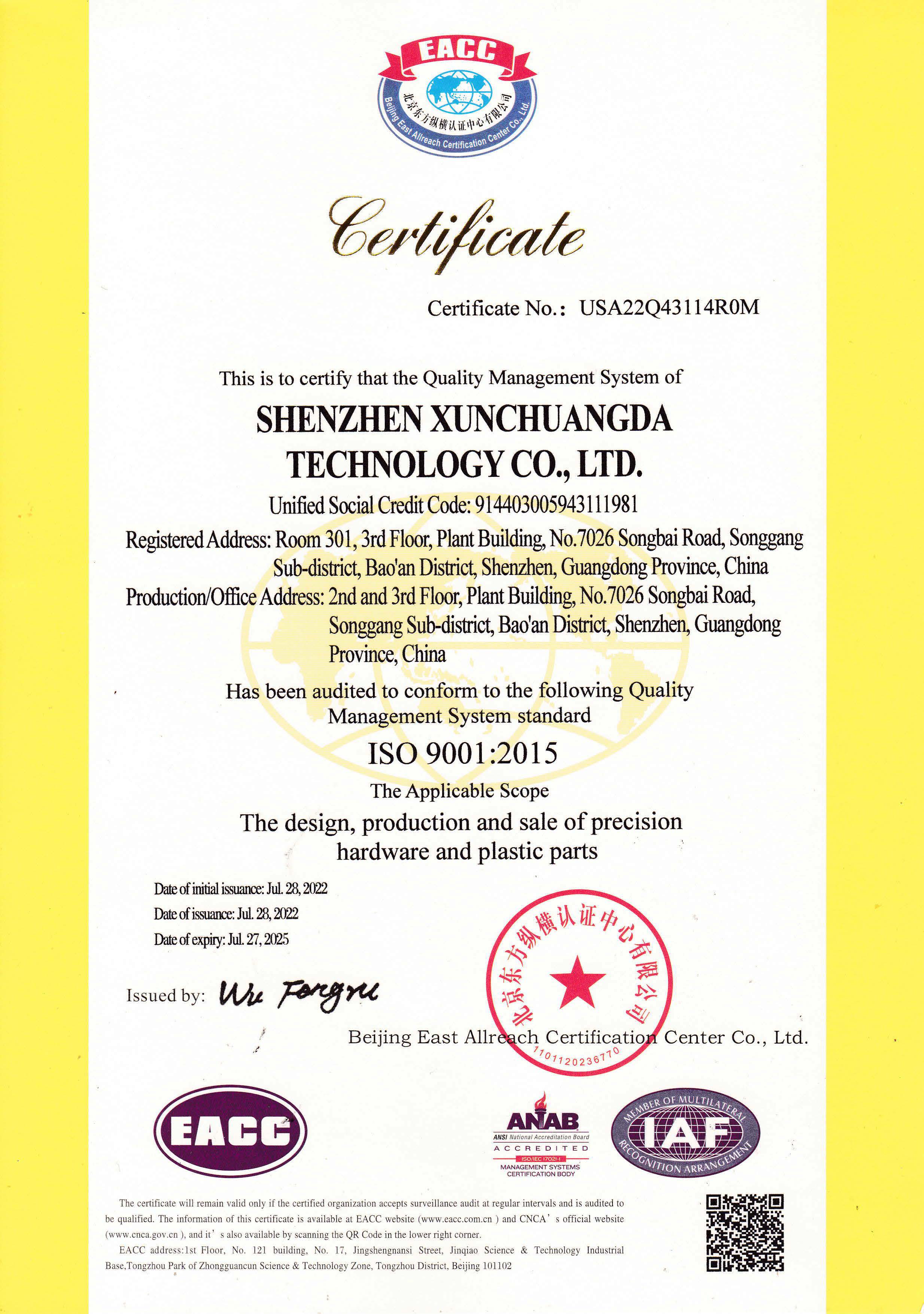
Certified by ISO9001 Quality Management System Again